Maleväljak
Cultural · Narva, Estonia · 2023
Cultural · Tartu, Estonia · 2023
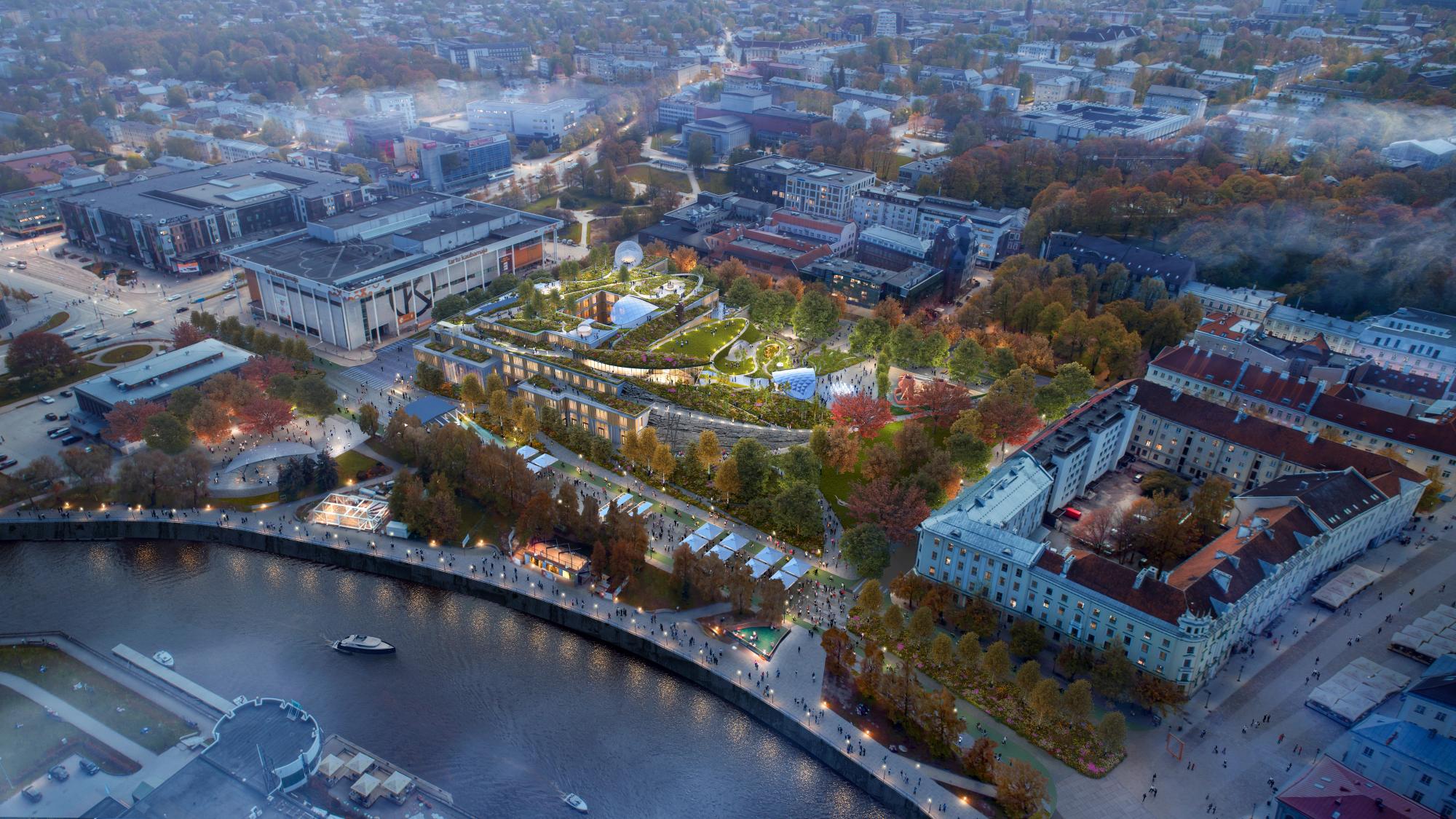
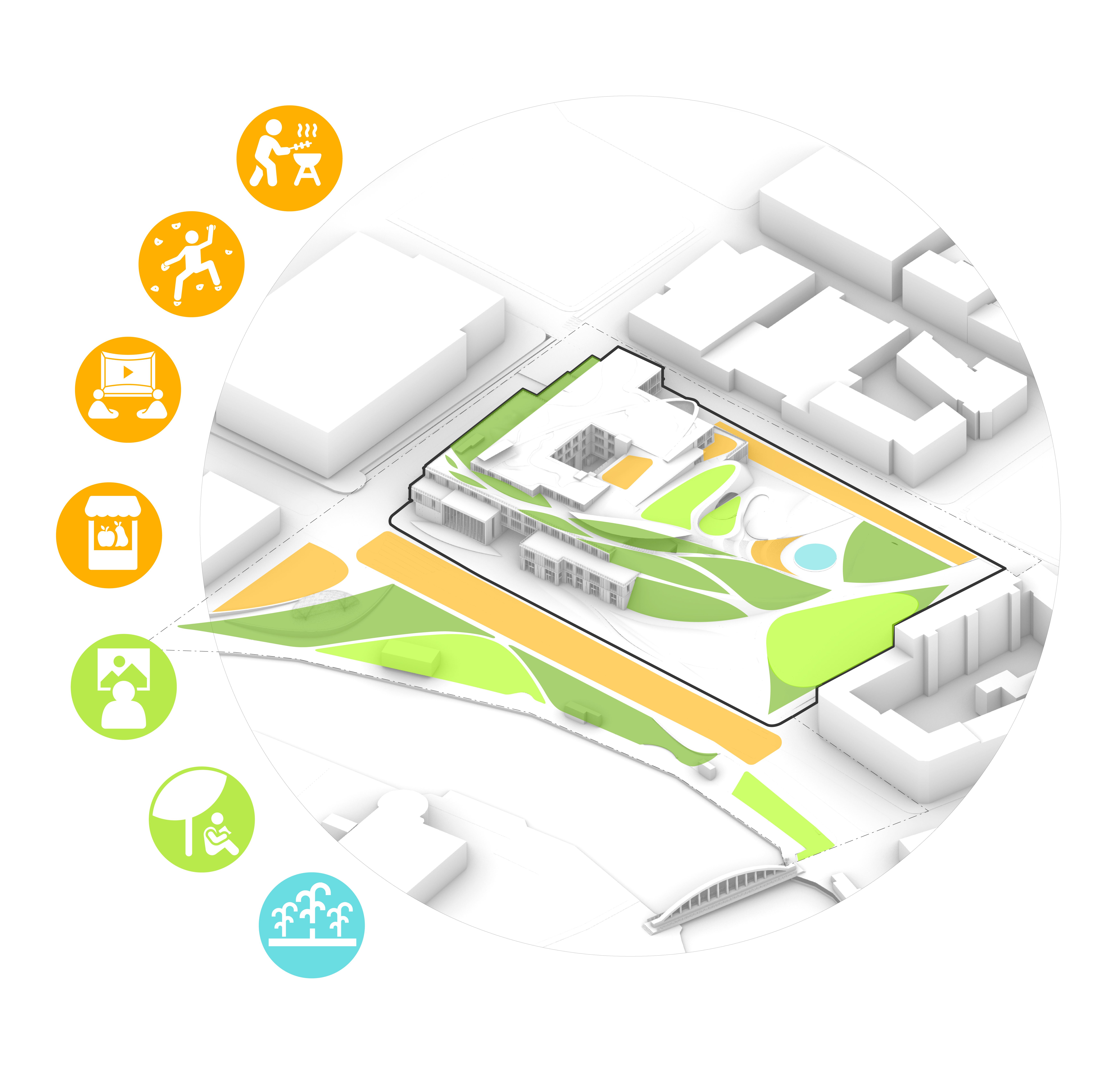
The proposal centers on restoring the land to nature and strengthening its ecological identity. To achieve this, the design increases the number of trees within the park by nearly 40 percent, creating a dense and interactive forest landscape that reconnects visitors to the country’s natural roots. The expanded woodland supports year-round activity—from summer berry picking to winter cross-country skiing—transforming the park into a flexible environment that adapts to seasonal change. The enhanced tree canopy also improves comfort by providing shade during warmer months and acting as a wind buffer in winter.
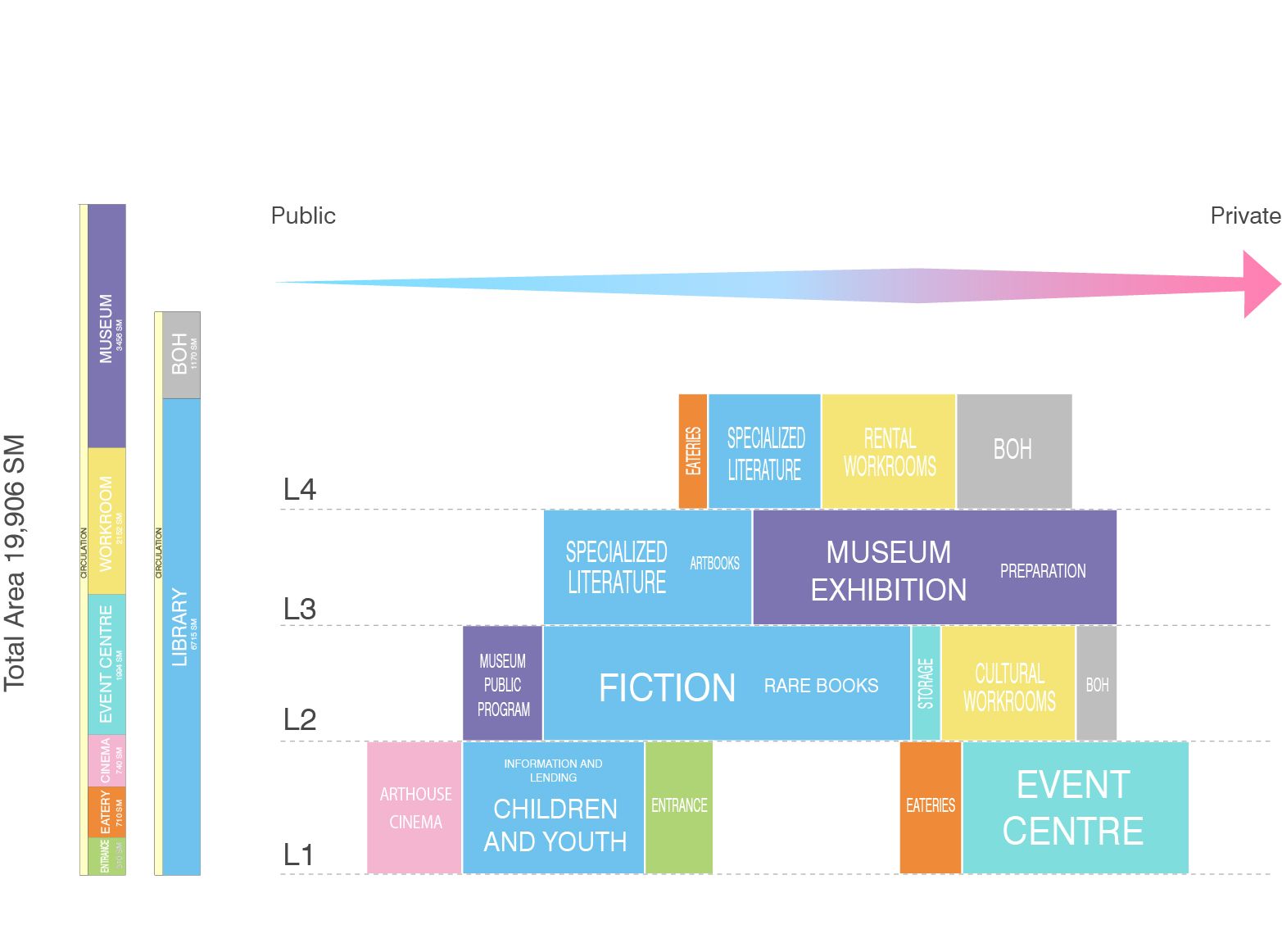
Architecturally, the project is organized around two primary pathways: a “Cultural Route” and a “Landscape Route.” The Cultural Route links programs that operate in different seasons, while the Landscape Route extends recreational opportunities throughout the year. Both journeys begin at a grand stair and unfold through interconnected spaces that promote flexibility and long-term resilience. Together, they allow visitors to explore the relationship between built form, landscape, and program, reinforcing the site as a dynamic cultural and recreational destination.
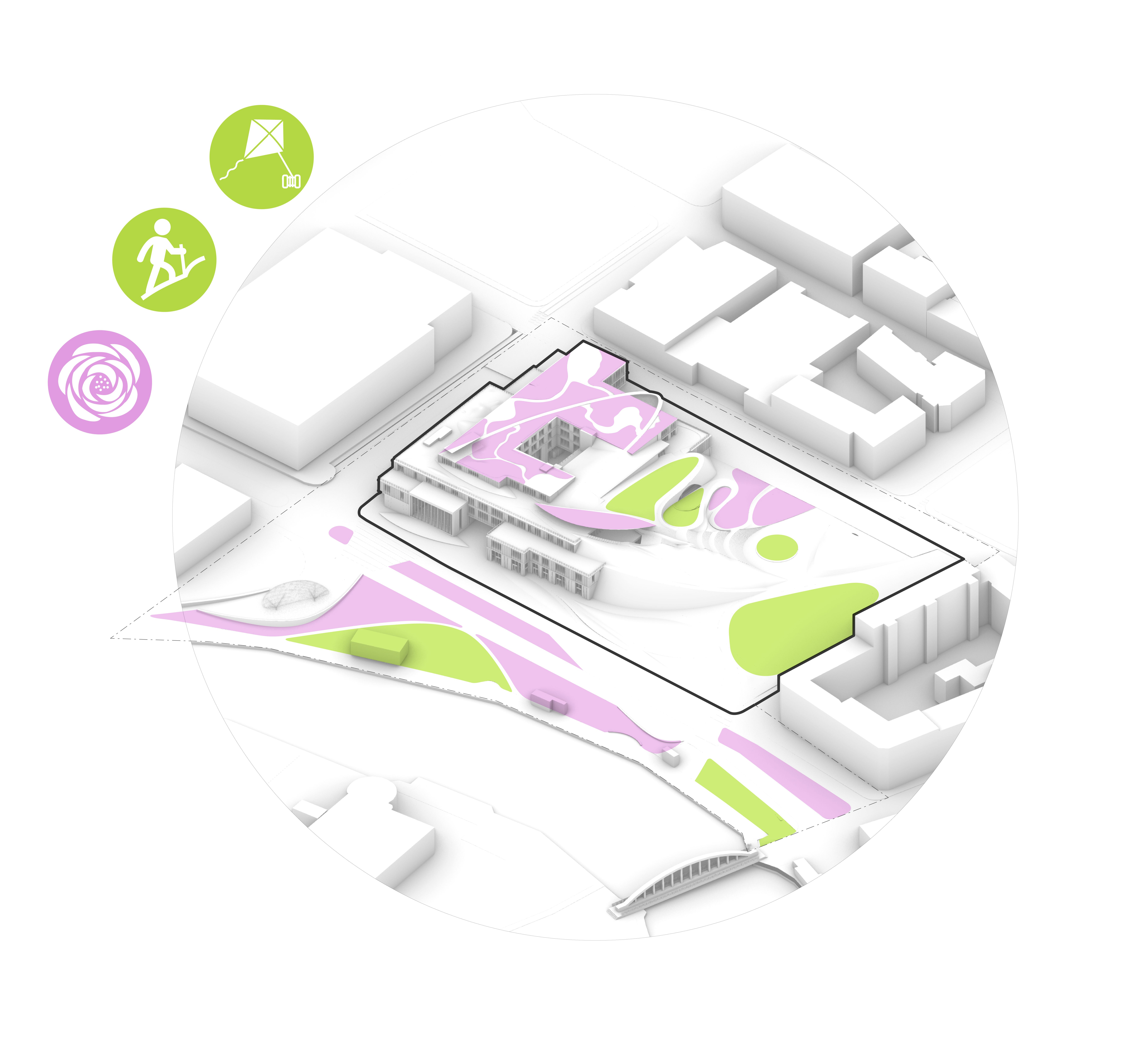
The building supports a seamless daily experience for its users. An employee may begin the day attending an 8 a.m. conference within the same building where they work. After the sessions conclude at 11 a.m., they return to their office before heading downstairs for lunch. The workday continues until early evening, followed by dinner at a top-floor restaurant offering expansive scenic views. The day concludes with a gradual descent along the landscaped ramp, creating a smooth transition from professional engagement to personal time.
Public access is carefully integrated into the project. Visitors can enter from either the landscaped edge or the central main entrance, with public programs primarily arranged along the landscape side. This approach encourages movement through the site’s natural setting while engaging with its various cultural and recreational functions. At the rooftop level, an outdoor auditorium provides an open-air venue for performances and gatherings. With panoramic views of the surrounding landscape, this space offers a distinctive and memorable experience.
Given Tartu’s significant seasonal variation in daylight—long summer days and short winter ones—the design carefully addresses solar orientation, shading, and daylight optimization. These strategies ensure energy efficiency while maintaining a comfortable and well-lit indoor environment for the cultural center throughout the year.
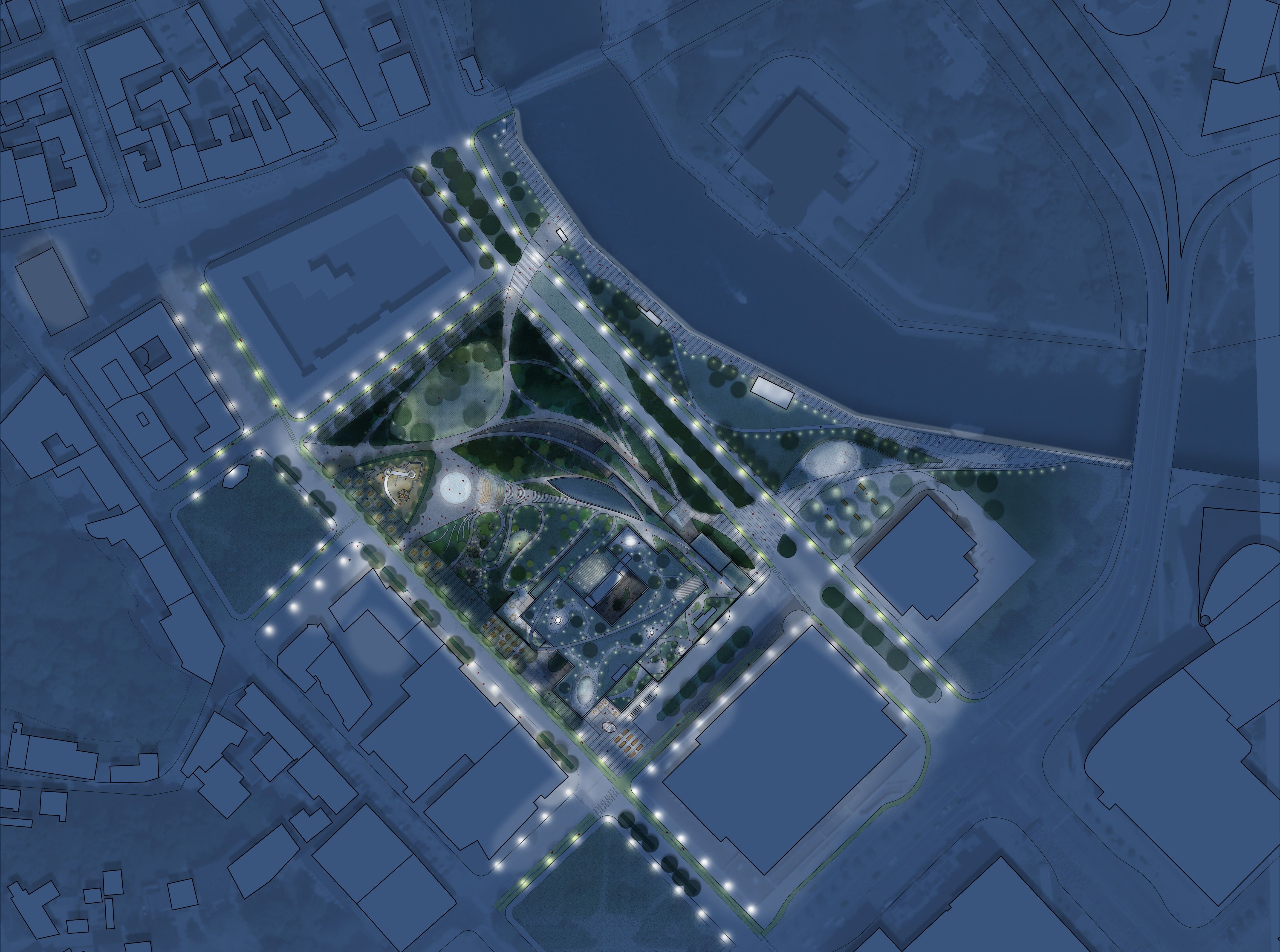
Sustainability is deeply embedded in the project’s environmental systems. The sloped landscape is designed to collect and channel rainwater into a storage tank located at the base of the cultural center. A filtration system ensures the harvested water meets appropriate quality standards for reuse. Stormwater management also draws inspiration from Estonia’s natural landscapes, incorporating bog-like systems to manage runoff while increasing forest density and foliage coverage.
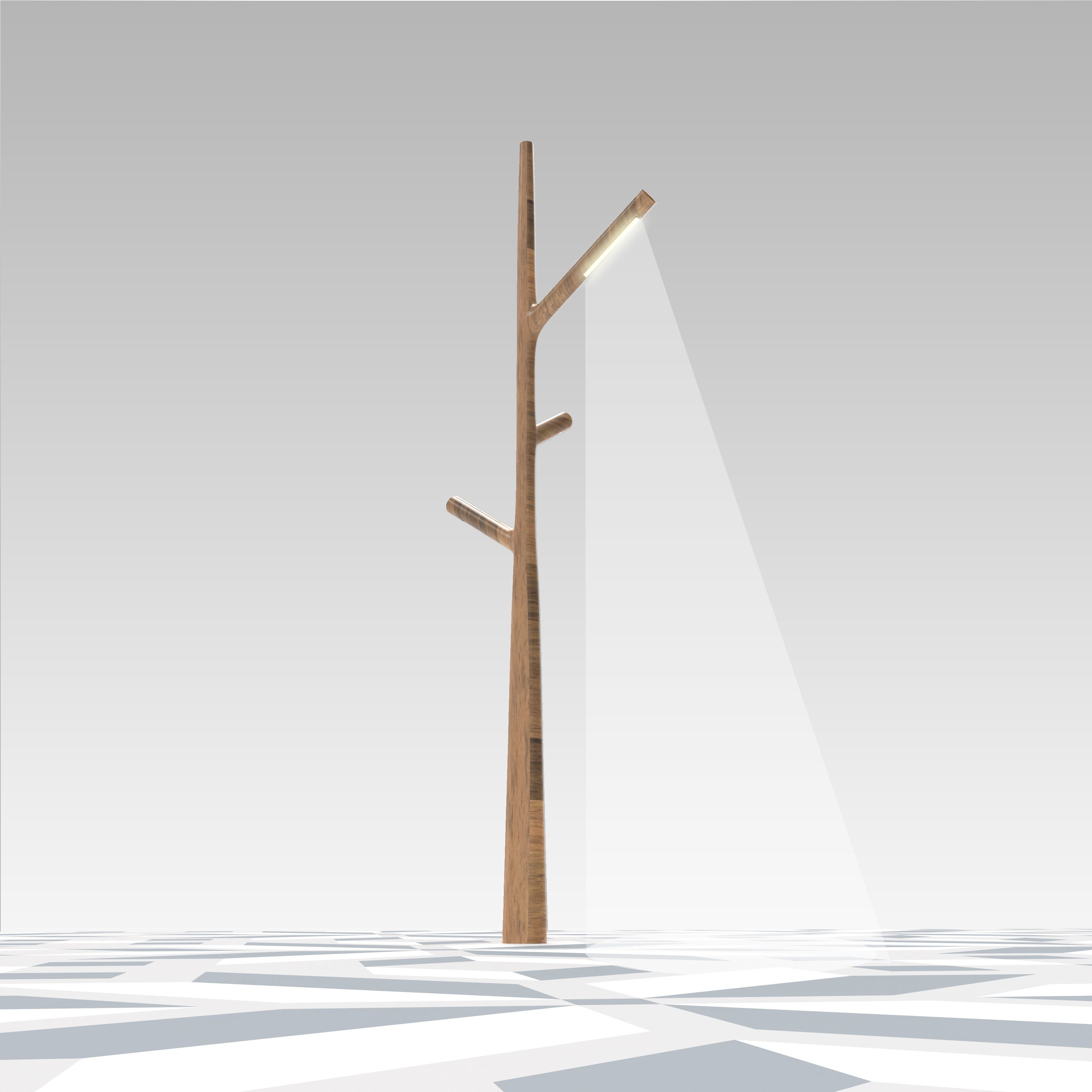

Material selection reinforces the sustainability goals. The use of cross-laminated timber (CLT) and heavy timber construction reduces carbon impact while creating a warm and inviting interior atmosphere. Exposed wood surfaces provide a natural aesthetic and strengthen the building’s connection to its ecological context.
Mechanical systems further support environmental performance. Geothermal heating and cooling are integrated through ground-source heat pumps located in the basement and landscaped areas, utilizing the earth’s stable temperature for efficiency. Mechanical spaces are distributed across the top floor, basement, and landscape zones. Fresh air intake is positioned at the roof level to ensure optimal indoor air quality.
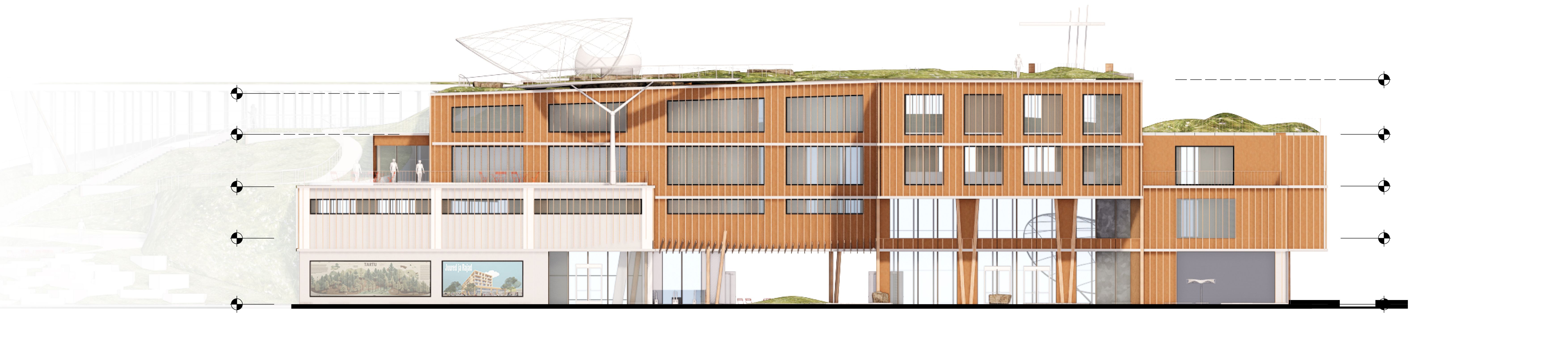
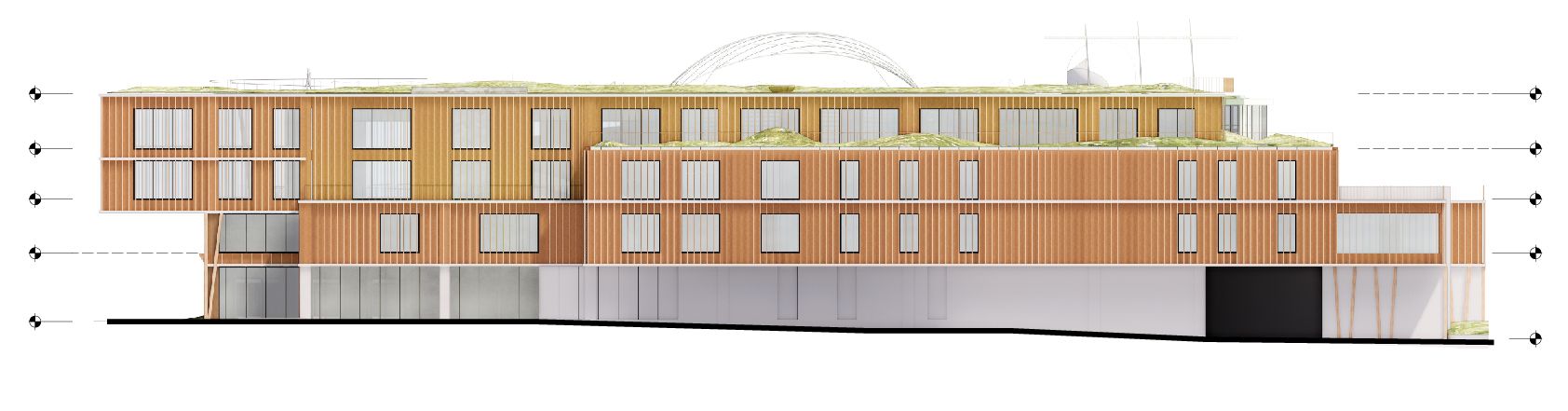
The building envelope incorporates an operable façade system that adjusts shading and ventilation based on programmatic needs. This adaptive skin allows museum, library, and office spaces to customize light levels and airflow, enhancing comfort while reducing energy consumption and maintenance demands across seasons.
At its core, the proposal emphasizes collaboration with the community of Tartu. Stakeholders and neighbors are actively engaged in the design process, particularly in the development of interior furniture and finishes. National symbols, such as the country’s flower, are incorporated into floor patterns, while beloved foods and popular Estonian snacks inspire seating and custom furnishings. Community participation continues through construction, allowing residents to contribute to interior finishes and making the project a shared civic achievement. In doing so, the cultural center becomes not only an architectural landmark, but a collective expression of identity and belonging.
Explore More